
Governance
Governance of the Mohawk Nation Council
A System Rooted in Tradition and Collective Responsibility
Mohawk Nation Council: Structure and Responsibilities
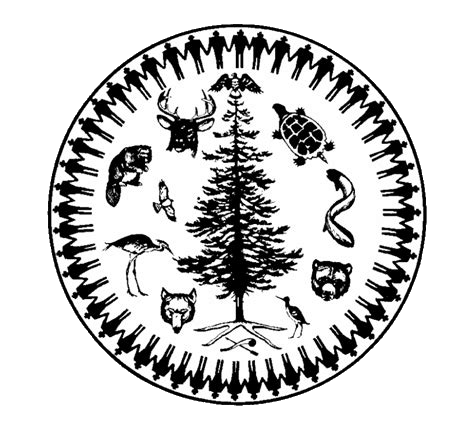
The Kanien’kehá:ka Nation Council pursuant to its sovereign status sits under and is governed by an ancient constitution known as the Kaienera’ko:wa; the Great Law of Peace. This law is rooted in the philosophy of Peace, Strength and Good mindedness of the people of the Confederacy working together to adhere to the teachings of the Peacemaker.
The Great Law of Peace governs all Haudenosaunee Nations, known as People of the Longhouse, who are comprised of the unified nations:
Kanien’kehá:ka – The Mohawk Nation, Eastern Door Keepers
Onenio’tehá:ka – The Oneida Nation, Younger Brothers
Ononta’kehá:ka – The Onondaga Nation (Central Fire),
Kaionhkehá:ka – The Cayuga Nation, Younger Brothers
Shotinontowane’á:ka – The Seneca Nation, Western Door Keepers
Tehatihskaró:roks – The Tuscarora Nation, Younger Brothers

The governance of the Kaníen’kehá:ka Nation rests on a foundation of tradition and collective responsibility, symbolized by its central fire in Onondaga, near Syracuse, NY—the recognized seat of authority for all Haudenosaunee Nations. Operating under the Kaianera’ko:wa, or Great Law of Peace, the Nation Council adheres to a centuries-old constitution that governs all Haudenosaunee Nations. Adherence to the Great Law ensures justice, unity, and peace across the interconnected Haudenosaunee nations.
Within this framework, the Akwesasne Mohawk Territory holds an officially sanctioned fire under the stewardship of the Kanien’kehá:ka Mohawk Nation Council. This council, composed of Chiefs (rotiianéhshon), Clan Mothers (iotiianéhshon), and Faith Keepers (kaié:ri niiorí:wake ronateríhonte), bears the vital responsibility of safeguarding the rights, territories, and cultural legacy of all Kanien’kehá:ka people.
A Matrilineal Governance System
The governance structure of the Kanien’kahá:ka people is deeply rooted in the clanship system, which is connected to animal moieties such as Bear, Wolf, and Turtle. Leadership within these clans is entrusted to women, underscoring the matrilineal nature of the Kanien’kehá:ka society, where lineage and clan affiliation follow the maternal line. This structure reflects a balance of power and ensures the preservation of traditions and cultural values.
Consensus-Building and Collective Decision-Making
The ancient governance model of the Kanien’kehá:ka, rooted in the principles of the Haudenosaunee Confederacy, emphasizes collective responsibility and consensus-building. Decisions are never made unilaterally. The voices of the people emerge through extensive deliberations involving Chiefs, Clan Mothers, and Faith Keepers. This approach ensures that the voices of the people are harmonized and that decisions reflect the collective will of the Nation.
Stewardship and Environmental Custodianship
Guided by the Kaienere’ko:wa (The Great Law of Peace), the Council also serves as a steward of the natural environment, advocating for the protection of land, water, and all living entities within its territories. This deep connection with the Earth underscores their identity and governance, emphasizing care and stewardship over dominion.
Diplomatic Efforts
The Council actively engages in diplomacy, fostering mutual respect and recognition with other Indigenous nations and external governments. Through these efforts, the Kanien’kehá:ka Mohawk Nation Council asserts its sovereignty, striving to preserve its cultural heritage and protect against the encroachments of modernity.
Political Voice of the People
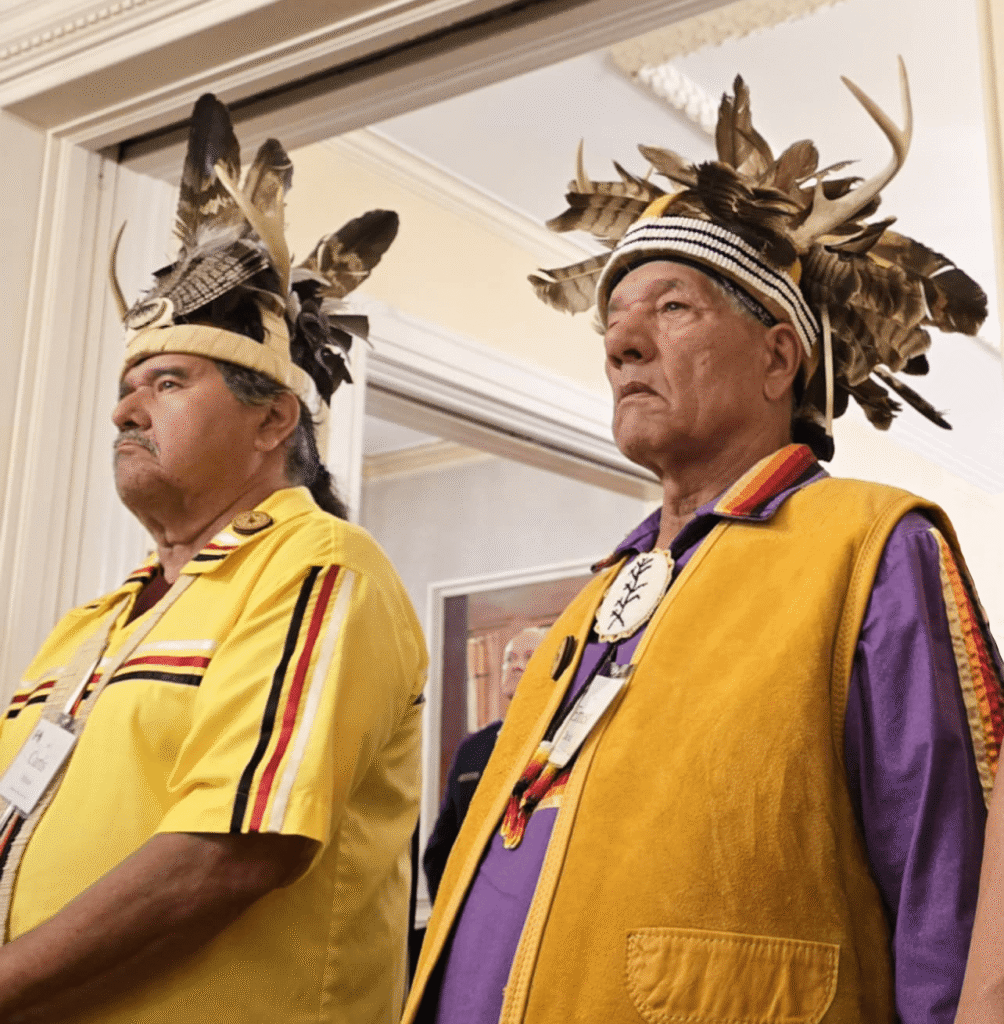
From birth, every child born into a clan inherits the natural right to voice concerns, marking their connection to the community. Clan meetings serve as platforms where individual, community, and national matters are deliberated. Clan Mothers play a vital role in discerning which issues require local resolution and which should escalate to the national level. Matters of national importance are addressed collaboratively by Clan Mothers and Chiefs, comprising the National Well, while local concerns are managed by community councils involving Sub-Chiefs, Faith Keepers, and Clan Mothers.
Current Kanien’kehá:ka Leadership
|
Chief Title |
Clan |
Chief |
Clan Mother |
|---|---|---|---|
|
Tekarihó:ken |
Turtle |
Allen MacNaughton |
-Vacant- |
|
Aionwahta |
Turtle |
-Vacant- |
-Vacant- |
|
Sha’tekarí:wate |
Turtle |
-Vacant- |
-Vacant- |
|
Sharenhó:wane |
Wolf |
Ernest David |
Angela Elijah |
|
Teionhnhéhkwen |
Wolf |
-Vacant- |
-Vacant- |
|
Orenhre’kó:wa |
Wolf |
Howard Thompson |
Julia Jacobs |
|
Tehana’karí:ne |
Bear |
Curtis Nelson |
Louise McDonald-Herne |
|
Ahstawenserenhtha |
Bear |
-Vacant- |
-Vacant- |
|
Shoskoharó:wane |
Bear |
-Vacant- |
-Vacant- |
Page published:
Page modified: